




1/28/2026 The Origins and Evolutions of Skiing
By Lenny Wright
About authorFrom Humble Beginnings
It’s no secret that skiing today is often viewed as an indulgent pastime, one made possible by modern society’s abundance of leisure time and disposable income. For many, the sport has become synonymous with luxury: fine dining, apres, and slope-side spas often take precedence over time actually spent on snow. Even the more demanding disciplines of backcountry skiing and ski mountaineering, where suffering is part of the appeal, remain rooted in privilege, a far cry from the essential survival tool skiing once was.
This modern framing makes it easy to forget that skiing’s origins are anything but leisurely. Thousands of years ago, long before ski lifts and climbing skins, skis were carved out of necessity and survival. They were instruments of travel, tools for hunting, and crafted for survival in environments where snow dominated the landscape. This long and storied history reveals a sport born not of excess but of human ingenuity in the face of extreme conditions.
The Early Days
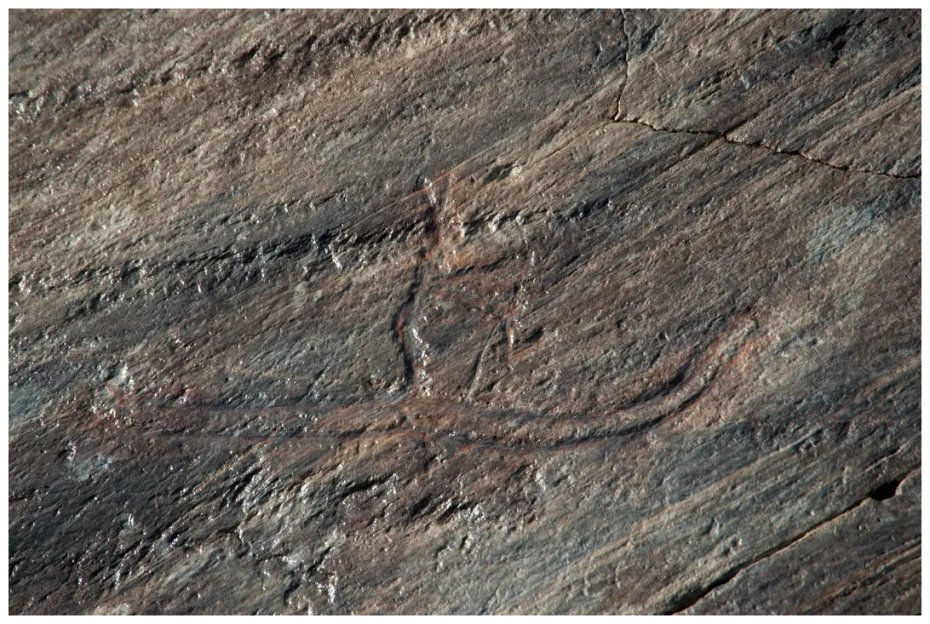
Necessity has long driven human innovation, especially in inhospitable environments, such as those covered by snow and ice. Early skis emerged as a practical solution to the challenge of winter mobility, enabling humans to traverse difficult, snowbound terrain more efficiently. Archaeological evidence of skiing's emergence dates back to around 8,000–5,000 BCE, when remnants of skis were found in the Altai region, which spans modern-day China and Russia, and ancient petroglyphs in Norway, indicating the widespread development of skis across Eurasia. Khom and Hemu, remote villages in this region, still teach and use ski-crafting methods that were used around 10,000 years ago for hunting, travel, recreation, and the transportation of goods.
These early designs, often crafted from pine or other dense hardwoods and treated with oils or animal fats to resist water damage, were secured to the foot with leather and rawhide bindings and propelled by a single long stick resembling an oar. It has long been believed that most of these precursor skis were bound with fur to facilitate movement, but recent discoveries, such as the skis from the Digervarden ice patch, suggest that fur wasn't utilized for all early skis. The Kalvtraskskidan, the oldest ski in the world, is an example where the lengths of both skis appear to have been cut to the same length, 204cm, and were not treated with oils or bound in fur. Having been found with an oar - the first ski pole - the skis could have been strictly a flotation device for traversing snowy landscapes or maybe even downhill travel. Early skis varied in length (some were twice as long as a human) and often came with an oar to paddle through snow; however, geography and use case necessitated different designs throughout the millennia.
The Spiritual Years
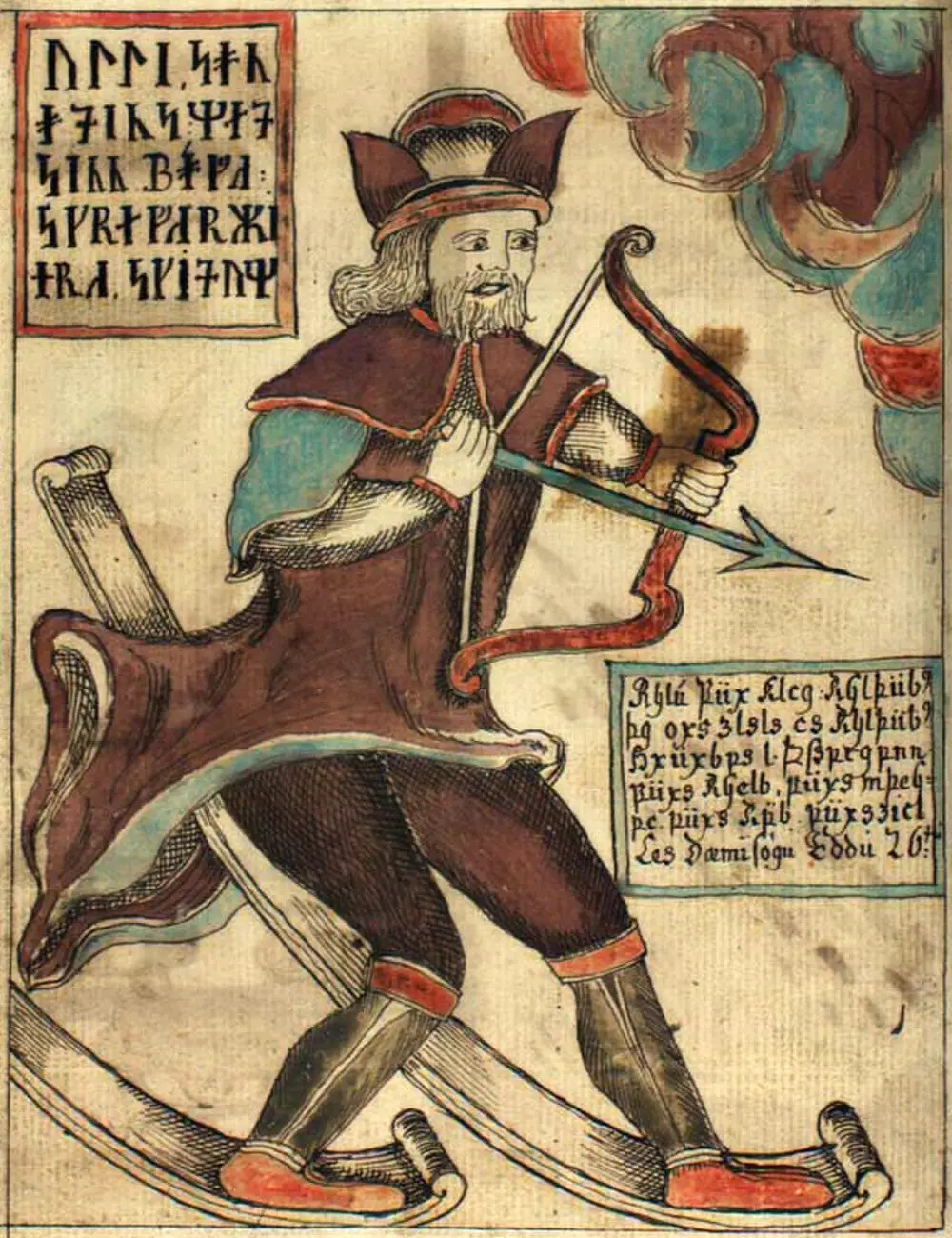
Fast-forward a few thousand years from its creation, and skiing begins to transcend mere practicality. Cultural and spiritual dimensions of skiing are reflected in Norse mythology, where deities such as Ullr and Skaði are closely associated with snow travel and hunting. Ullr, the lord of bows and a symbol of the turning of seasons, was often depicted on skis, wielding a bow, while Skaði, a formidable giantess who ran with wolves and hunted with precision, was a goddess of winter and embodied the tumultuous beauty and danger of the wintry landscape. These mythological figures symbolized traits essential to survival in northern environments: resilience, independence, and respect for the natural world. Their presence in early Scandinavian lore highlights the profound cultural significance of skiing, extending well beyond its utilitarian function. Scandinavian ski origins date back to ~3000-4000 BCE, and the nomadic Sámi people are largely credited with ‘inventing’ skiing on the Eurasian continent due to their nomadic lifestyle upon the ice in the far north.
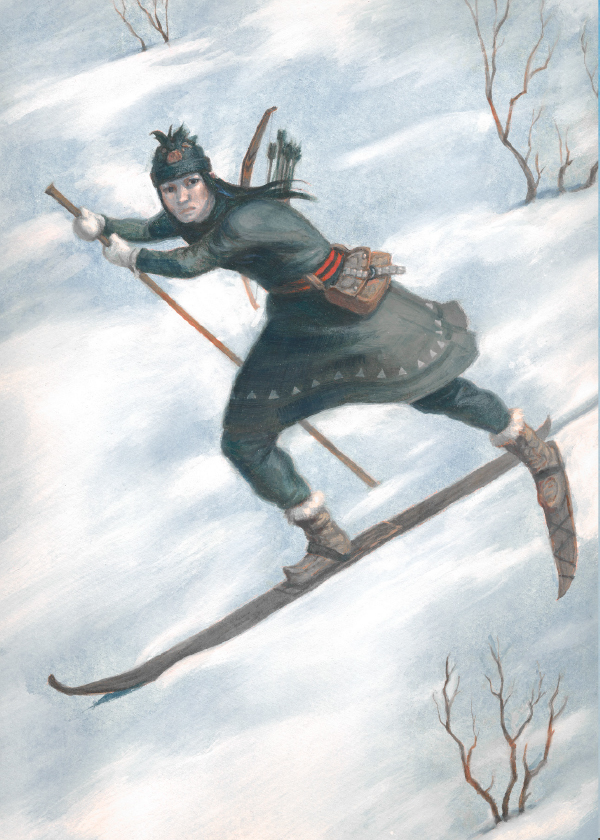
It’s from the Sámi people that skis proliferated throughout Scandinavia, being used for recreation and continuing to serve a practical purpose in the north. As a culture with shamanistic and predominantly animistic spirituality centered on the natural world, the Sámi do not have a designated god for skiing, although their pantheon contains many deities related to travel, hunting, snow, and other aspects of the natural world. To the Sámi, skis and sleds are an integral and beloved part of their culture and nomadic lifestyle, and were certainly a focal point not only for survival but also for transporting goods like furs and fish, as well as for recreation.
The Dawn of Ski Mountaineering
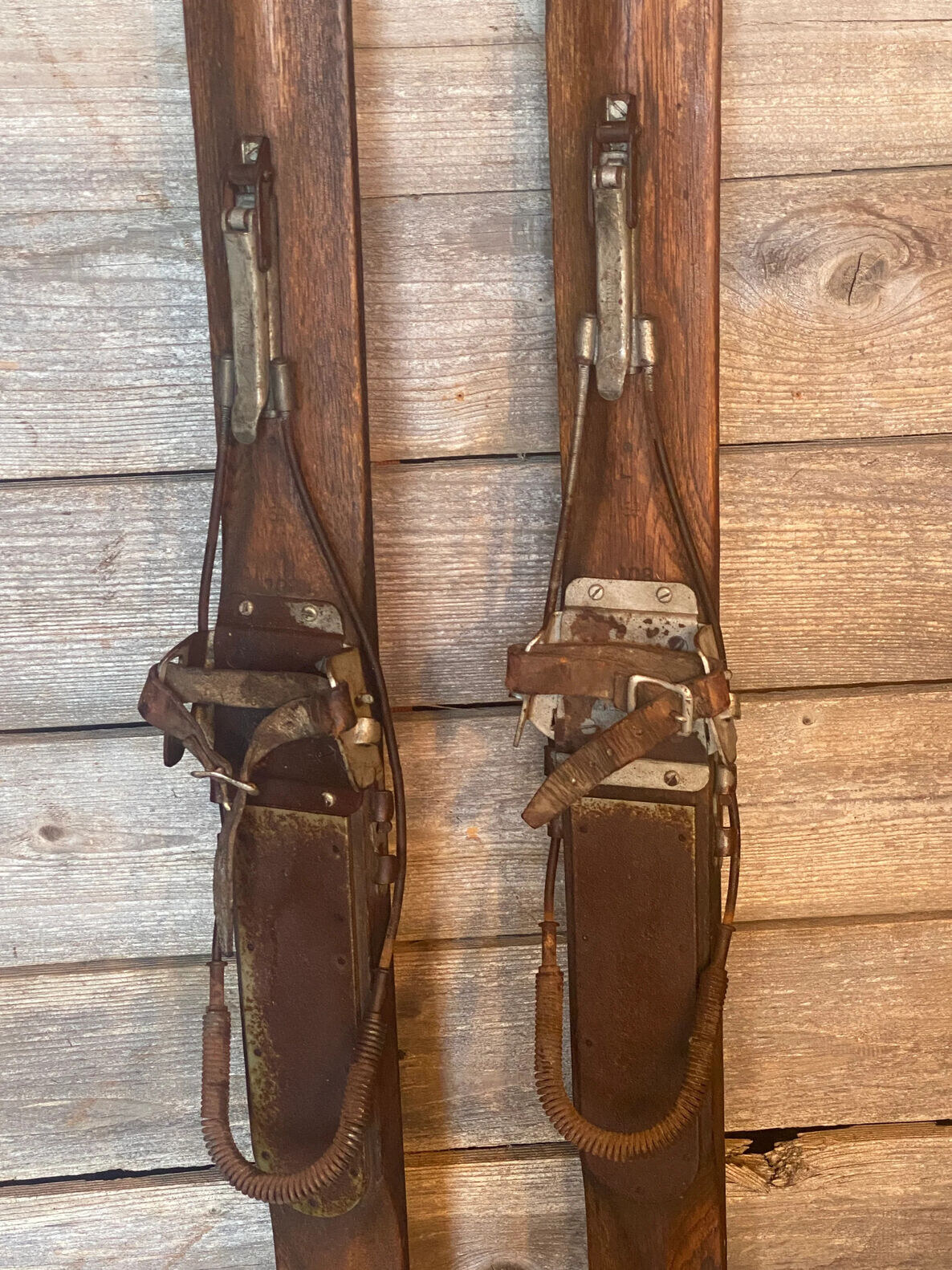
The advent of the Telemark ski binding in 1868 by Sondre Norheim shifted performance expectations and the practical capabilities of ski equipment. This affected everything in the broader context of skiing as a sport, from early slalom races to Nordic skiing. Still, skiing was seen as more of an interdisciplinary skill than a standalone activity.
By the 19th century, Norwegian Patrol races were popular local events and the precursor to modern-day biathlon races. These patrol races were part military demonstration and part competition. The races were usually held over a distance of at least 20 km - 25 km, typically with a 20kg pack and a total elevation gain of 500-1200m. These teams consisted of four members in total, one leader and three team members.
These races experienced a surge in popularity, leading to gear innovation, such as the introduction of metal edges, and encouraging more community-inspired races and ski clubs. As mentioned earlier, these patrol races were a team effort, and given the athletic prowess required, they were featured as demonstration events in the 1924, 1928, and 1936 Olympics. With the public eye now on ski-mountaineering and the entertainment it provides, civilian-organized races began to appear more regularly between the end of World War I and the beginning of World War II. These patrol races were the true birth of ski-mountaineering, and the races gained popularity largely in Europe during the 1920s and 1930s—a phenomenon that seems to be repeating itself.
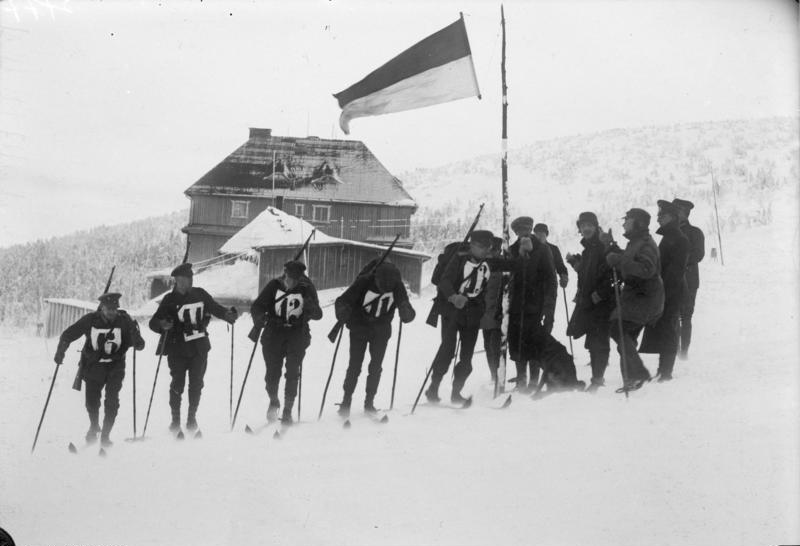
Breaking Trail
Compared to its winter-sport counterparts, Ski Mountaineering (SkiMo) is a relatively small and tight-knit community that focuses on the art of quick travel through technical terrain. Tracing its lineage to military necessity, this incredible sport wouldn't be what it is without the athletes and pioneers who paved the way for what we enjoy today.
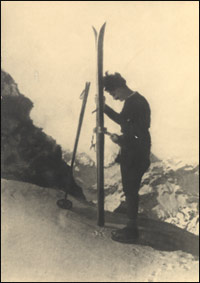
Ottorino Mezzalama, a decorated military officer during the First World War, who, amongst many other accomplishments, served as the technical director of military ski training, and during the postwar years, built his reputation as a skilled ski mountaineer. During an avalanche in the Rochemolles Valley in 1931, Mezzalama joined others on a volunteer search and rescue mission. Complications arose due to foul weather and a thunderstorm, forcing Domenico Mazzocchi and Mezzalama to shelter for three days until the weather cleared. Tragically, Mezzalama was taken by an avalanche when he and Mazzocchi were descending from Bichierre on the fourth day.
With his military background and passion for skiing and alpinism, Mezzalama is considered one of the fathers of modern ski mountaineering. In 1933, one of the most well-known ski mountaineering races was initiated by Ottorino’s friends, who dedicated it to him. The Trofeo Mezzalama race is 46km in length and spans 2,862 metres of ascent and 3,145 metres of descent in teams of three between Cervinia and Gressoney. After its inception, the race was open only to male athletes until 1935. Paula Wiesinger, who had been invited to spectate the race, replaced Guisto Gervasutti, who was incapacitated from competing due to an injury. Paula wore Guisto’s uniform, donned his cap, and competed in his place. Wiesinger was only discovered halfway through the race due to a checkpoint stop.
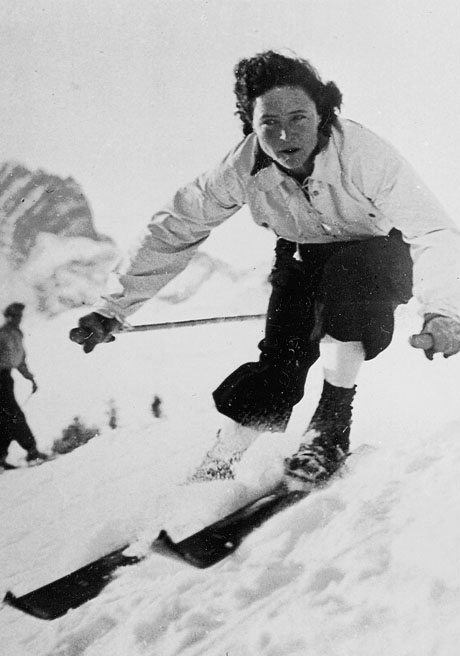
Paula Wiesinger won a total of 15 Italian Alpine skiing titles during 1931-1936, winning the world championships at Cortina d’Ampezzo, in the downhill event in 1932. She competed in the 1936 Olympic Winter Games, finishing 16th in the Alpine Combined event. Individuals like Paula and Ottorino were quintessential in shaping the conditions for what we know as SkiMo competition today.
Skiing was first driven by necessity, fueled by humanity's insatiable appetite for adventure, and later honed and refined by competition. As the gear continues to evolve, athletes become even more superhuman, and the competition gets even more ferocious, we should never forget the storied past that has landed skiing where it sits amongst us today. Set to make its Olympic debut at the 2026 Winter Games in Milano Cortina, SkiMo is the start of a new chapter in this long history.
Comments
I took a brief peek into this, but might still make some edits to this article and add that 1888-1889 adventure in for some additional light reading! Thank you for the recommendation!
Continued reading
9/4/2026
Change of Fun - Skiing Mount Rainier

10/1/2025