






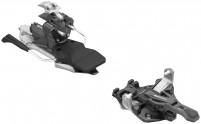

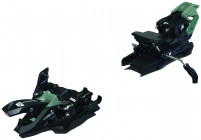
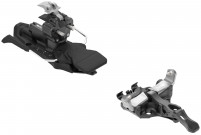

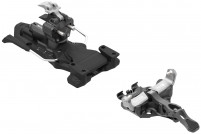
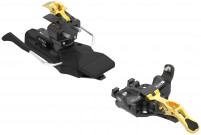
I feel bad for giving a poor review, but I've used a lot of different tech bindings, and I am greatly disappointed in the Ridge. I originally got them because I like Dynafit bindings, I wanted something with a solid brake (which they do have) and I was happy that Dynafit is finally using a "drop-in" style crampon, like Plum.
Here's are the problems (and a few good points):
1) Step in is not very good. This is really surprising, because Dynafit's advertising would make you think it is magical, but actually I find them considerably less reliable (in terms of how many tries to click in) compared with the tried-and-true Dynafit Radical or earlier Vertical model. I have compared side by side and I typically find I am in on first step with the Radical, but it takes me 3 or 4 tries with the Ridge. This is with very standard, popular boots (Atomic Backland Pro, Scarpa Maestrale, both current models). 1 star
2. Snow packing is terrible. The problem is that there is a very deep hole under the toe springs. The tried-and-true method is to hold your skis vertically and click in / out a few times to clear snow, which falls out of the binding. Works great on Radicals. Snow gets trapped in the Ridges. I've never had this much trouble with any other binding. 0 stars.
3) The "wings" that you use to unlock and rotate the heel are clever, but are mostly a solution in search of a problem. They do work, but they also can get iced up (though clear easily in my experience). 3 stars. (nothing wrong, but nothing special)
4) "Zero-gap" is 2 mm gap, which means you need yet another gap "feeler" to keep track of if you have multiple boots. Compare with the Marker Cruise, which has zero gap and so requires no such tool. Note that very few "zero gap" bindings actually are that. The clever thing about the Cruise is that it has a gap of about 4 mm of travel on the pins themselves, but above that, the top of the bindings justs out a bit, so that it just kisses the boot. Very clever and very easy to adjust. This is all "fine" as it is not worse than other bindings, but why create yet another new standard? 3 stars.
5) "Performance". Supposed to be better because of the elastic travel and "zero gap". Maybe. I cannot tell the difference. 3 stars.
6) Heel lifters. Easily flipped, but also they easily flip themselves, and then get in the way when you are trying to step in. ATK has this problem too, but ATK has magnets and a way to push down and secure the heel lifter. It's a bit annoying, but it works, whereas with the Ridge, despite being heavier, there is nothing in the design to prevent this. Again compare with Marker Cruise (which like the Ridge you turn 180 to go from ski to walk): on the Cruise, if the heel lifter accidentally is flipped over the wrong way, it doesn't matter, as it is short enough to not be in the way of stepping into downhill model. 2 stars (because the heel lifters are nice, otherwise).
7) Weight. Nothing special here. 3 stars.
8) Brakes: Strong, and auto-stowing. Works very well. 5 stars.
9) Crampons: Not as easy to just drop in as Plum (for some reason, but Dyanfits are more fiddly), but still a vast improvement over all other designs. 4 stars.
Average = 2.7 stars, but I'm rounding down to 2 because Dynafit ought to know better after all these years!
A couple of comparisons worth making:
Marker Cruise is a very similar binding in terms of design philosophy. This is my favorite binding for winter use. Most would consider them to heavy to make sense for a dedicated "big day" binding, especially if your day includes carrying skis on your back, but they are so convenient and easy to use that I love them anyway). I find everything about them much better, especially the step-in and heel design. I've had zero problems. Step-in is fantastic, and snow clearance is excellent. The only downsides are 1) bigger delta (if you care about that, you can always shim), 2) slide-in-crampons (everybody should just pay Plum to license their's -- it's the best!); 3) slightly heavier, but not enough to notice.
Dynafit Seven Summits. Much much better heel design, but apparently the same weirdly designed toe piece. I'm replacing my Ridge heels with these, because the hole pattern is the same. We'll see how that goes. The problem with the Seven Summits it that it only has one heel-lift flap, and to get two heights you have to turn it 180. Not a big deal, but still, in this day and age, one ought to be able to do better (and many bindings do!). It is considerably lighter than Ridge, so that's a plus.
I'm curious to finally try the much-storied ATK Raider Evo and I may just replace my Ridge/Seven Summits hybrid with them if I continue to be unhappy. Unfortunately, the hole patterns are too similar to the Cruise to replace with those, which would be my preference.
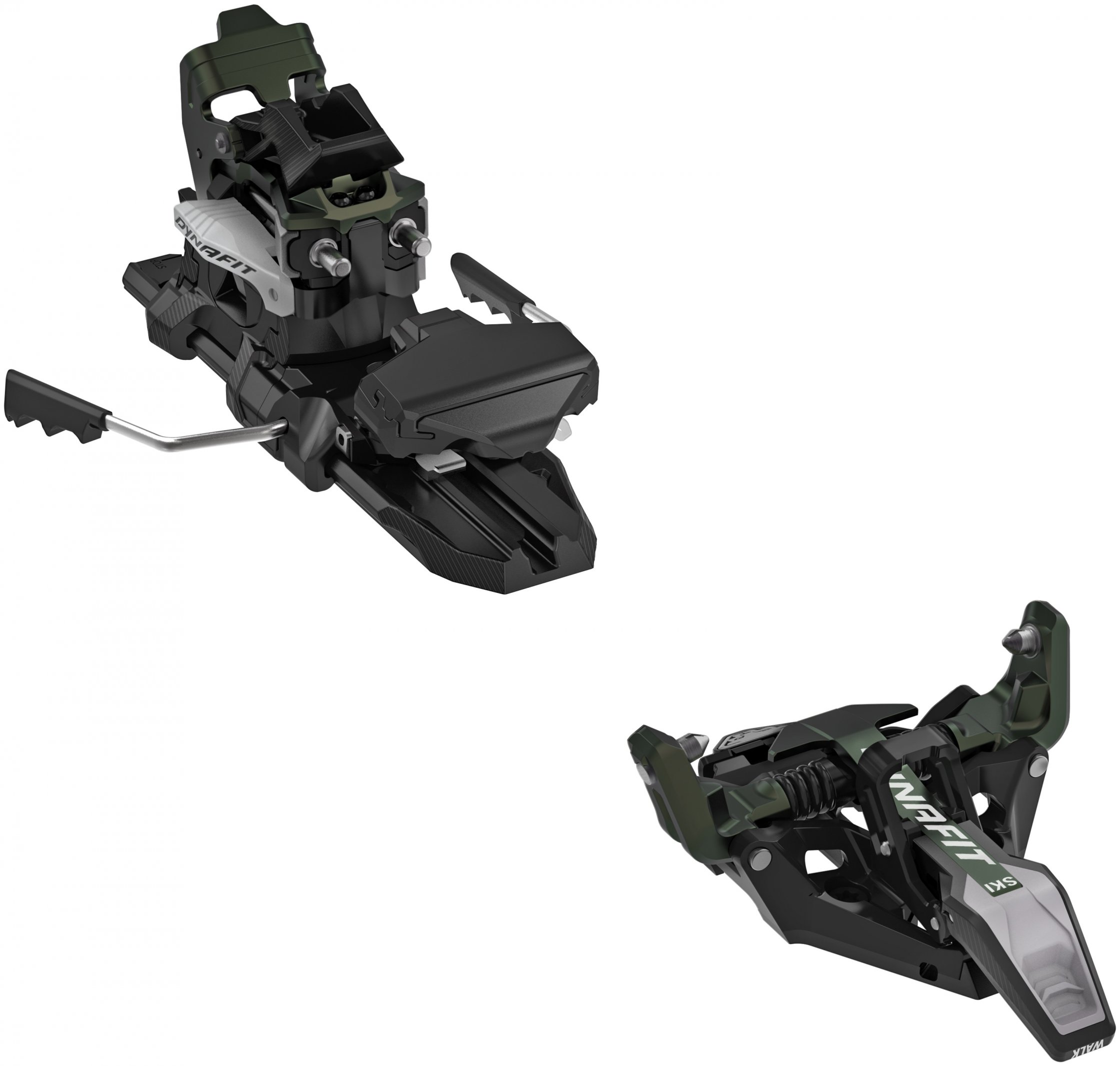
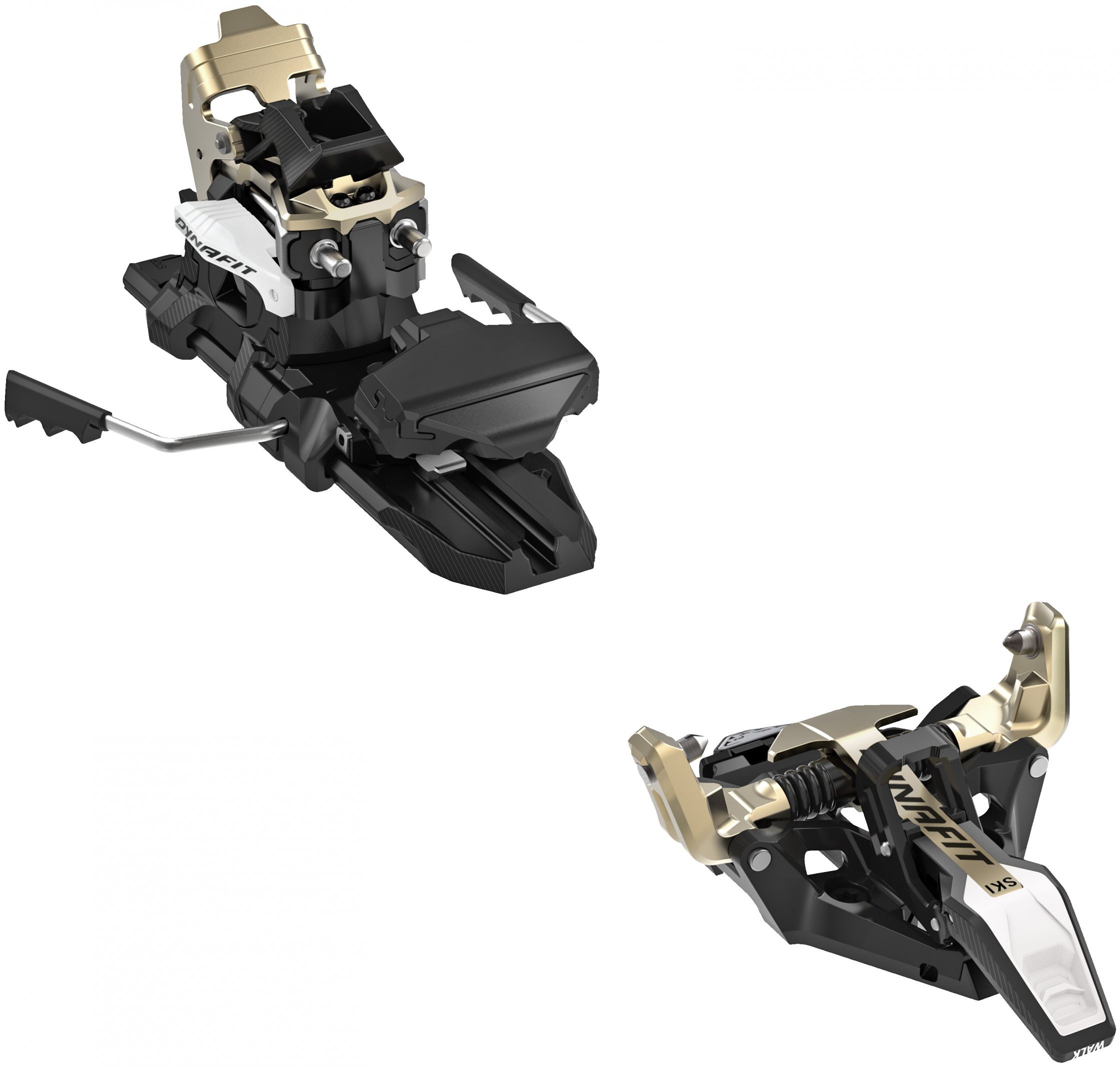
Dynafit Ridge Binding
Having created the design for pin bindings as we know them today, Dynafit has rightfully been associated with durable and long-lasting tech binding designs that perform at the highest level. With the Ridge binding, Dynafit continues this proud tradition but with an increased emphasis on user-friendliness. Generally, most braked bindings require the heel piece to be rotated 90-180° to be placed into the touring configuration. Switching out of this mode can be "exciting" as the heel piece is usually quite eager to get back into the skiing mode, occasionally catching an unaware finger between the AFD and heel turret. Recognizing this, Dynafit came up with the Easy Turn Tech system, which allows the heel turret to be decoupled from the baseplate, facilitating less intimidating transitions. The low-gap heel offers excellent performance while the fully adjustable vertical and lateral release allows you to choose your ideal setting between 4-12. For ease of use in icy terrain, the Ridge binding now allows for ski crampons to be placed directly into the crampon receptor (similar to the system used by Plum) instead of being slid in from the side. For an easy-to-use binding that offers excellent performance, look no further than the Ridge binding from Dynafit.
- Easy Turn Tech system allows for friction-free rotation of the heel turret, preventing your fingers from getting pinched.
- Auto-locking brake will retract into uphill mode just by stepping on it after rotating the heel.
- Low 2mm heel gap provides rebound when exiting deep turns and improves release consistency.
- Easy Entry Surface and Step-In Guide enable quick entry into the toe piece.
- Safe Brake System prevents the brakes from being inadvertently activated.
- Ice Breaker Toe Piece resists ice and snow buildup for reliable use far from the trailhead.
- BSL adjustment of 25mm accommodates a quiver of boots, allowing you to share equipment with the in-laws.
- Quick-In Crampon Slot allows ski crampons to be quickly and easily placed, forgoing the hassle of ski crampons of years past.
Size note: The brakes run a bit wide for their stated width. If you have any doubts, we encourage rounding down.
| Specifications | |
|
Weight |
420g [98mm] |
| Weight (pair) | 840g [98mm] |
|
Boot |
Tech |
|
Brakes |
88, 98, 110, 120 |
|
BSL |
25mm |
|
Riser |
2 + flat |
|
Vertical |
4-12 |
|
Lateral |
4-12 |
|
Crampon |
Yes |
| Specs Verified | Yes |
| Design | |
|
|
Aluminum, high-tech synthetic, stainless steel pins |
| Skimo Co Says | |
| Usage | Powder harvesting, crud, and everything in between |
| Notes | Heel piece easily rotates from touring to ski modes |
| Bottom Line | An easy-to-use binding with excellent performance |
| Compare to other Full-featured Bindings | |
Related Products
Questions & Reviews
12/27/2025
Slight correction to my point #6 above, as I was recalling the annoyance incorrectly. Heel lifters can't actually get in the way of stepping in. The problem I encountered is the heel lifter flipping up so that I could stop down in flat mode and activate the brake lock. To be fair to Dynafit, this problem also occurs easily with ATK bindings, and could also occur with the Cruise (though with the latter I find it stay in place much better). There's an advantage in this respect to the older style Dynafit bindings (as well as the new Seven Summits, and bindings like Plum Guide, Pika and many others) which rotate about 90°, not 180°, between uphill and downhill modes).
Comment on this review:
11/14/2025
Hey again,
I'm excited to finally get my bindings mounted, but my local ski shop is looking for a jig to use.. do you have one that I can buy?
I'm excited to finally get my bindings mounted, but my local ski shop is looking for a jig to use.. do you have one that I can buy?
11/14/2025
Hi Matthew, We do not sell mounting jigs. Your shop should look into getting one. If they are a Dynafit dealer, it should be easy.
Answer this question:
9/26/2025
Is the heel of the Dynafit Range bindings fixed (with the 2mm gap) or will it flex back under compression?
9/26/2025
Phil,
The Ridge heel peice has 7mm of travel to accommodate ski flex.
The Ridge heel peice has 7mm of travel to accommodate ski flex.
Answer this question:
9/17/2025
I want to mount these on a pair of Black diamond Helios 104. Has anyone had this set up? Can I be confident the 98 mm brakes of this binding will fit over a 104 waist ski?
9/18/2025
Hi Matt, I held one up to a Helio 104 and the 98mm actually fit well. Close but it worked.
Answer this question:
7/3/2025
How’s the heel/toe drop on these bindings? Does the toe piece come with a shim toe level out the drop like the Freeraider?
Thanks yall rock.
Thanks yall rock.
7/6/2025
Hi Stephen, the delta is +7. We've got a full chart here. There aren't any shims available for the Ridge that I'm aware of.
Answer this question:
1/2/2025
How wide of a ski will the 98mm brake accommodate? Thanks!
1/2/2025
Hi Andy,
The 98mm will fit over a 104-106mm ski without bending, depending on the shape of the edge of the ski.
The 98mm will fit over a 104-106mm ski without bending, depending on the shape of the edge of the ski.
Answer this question:
1/1/2025
Does this have the same mounting/hole pattern as the radical/rotation? Thanks!
1/1/2025
Hi Andy,
It does not have the same hole pattern as the Radical or the Rotation, unfortunately. It does share a hole pattern with the new Seven Summits binding.
It does not have the same hole pattern as the Radical or the Rotation, unfortunately. It does share a hole pattern with the new Seven Summits binding.
Answer this question:
12/24/2024
Do these bindings still have a gapless heel or has that changed? I saw a note in your mind the gap article. Mostly trying to make sense of what 7mm of forward pressure means in the binding description.
Also do the brakes need an afd because they operate similar to a free ride spacer on the ATK bindings or is there a gap?
Thanks
Also do the brakes need an afd because they operate similar to a free ride spacer on the ATK bindings or is there a gap?
Thanks
12/24/2024
Hi Austin,
These now have a 2mm gap, the original production was gapless.
I believe the forward pressure comment in the description is referencing that you'll get forward pressure when the ski flexes in a turn, which will give you a bit of energy coming out of the turn. The binding shouldn't be adjusted to have forward pressure.
You can measure the heel pins to determine which version you have - 9mm pins are the original production which is a 0.1mm gap, 11mm pins are the current production which has a 2mm gap.
The brakes press against the sole of the boot, no gap. So similar to a freeride spacer in that they provide some support under the boot, but they'll be providing constant upward force on the boot, whereas your boot will only touch a freeride spacer during an impact.
These now have a 2mm gap, the original production was gapless.
I believe the forward pressure comment in the description is referencing that you'll get forward pressure when the ski flexes in a turn, which will give you a bit of energy coming out of the turn. The binding shouldn't be adjusted to have forward pressure.
You can measure the heel pins to determine which version you have - 9mm pins are the original production which is a 0.1mm gap, 11mm pins are the current production which has a 2mm gap.
The brakes press against the sole of the boot, no gap. So similar to a freeride spacer in that they provide some support under the boot, but they'll be providing constant upward force on the boot, whereas your boot will only touch a freeride spacer during an impact.
Answer this question:
12/19/2024
Hello,
Would the 98mm brake width work with a 104mm ski? I saw in another question that you said they run a little wide. Or would I be better off getting the 110mm brake?
Would the 98mm brake width work with a 104mm ski? I saw in another question that you said they run a little wide. Or would I be better off getting the 110mm brake?
12/19/2024
Jon, Yes they do run wide. The 98mm would be plenty wide enough.
Answer this question:
12/7/2024
Will the 110 brakes fit on the Armada Locator 112 (length 180)?
12/7/2024
Hi Eric! These brakes run a little wide and should fit over a 112mm ski with no trouble. In any case, the majority of 110mm brakes will fit over a 112mm ski, regardless of the manufacturer. Thanks!
Answer this question:
12/4/2024
Can the vertical and lateral release be adjusted independently?
Also, any early indications of pre-release issues specific to sole styles or boots? (I'm having pre-release issues with mine, my shop has only seen one pair of them in person)
Thanks!
Also, any early indications of pre-release issues specific to sole styles or boots? (I'm having pre-release issues with mine, my shop has only seen one pair of them in person)
Thanks!
12/4/2024
Hi Chris,
Yes, the release mechanisms are independent. This binding is quite resistant to pre-release if adjusted properly. There has been some concern about whether correct adjustment is happening in the wild. If you could shoot us a couple photos of your boot in the system, specifically focused on the heel gap, that would help. A video works as well (a youtube link or similar).
Also, FYI, there was a batch of early production that was recalled for an improvement to the brake AFD which you should check you have.
Yes, the release mechanisms are independent. This binding is quite resistant to pre-release if adjusted properly. There has been some concern about whether correct adjustment is happening in the wild. If you could shoot us a couple photos of your boot in the system, specifically focused on the heel gap, that would help. A video works as well (a youtube link or similar).
Also, FYI, there was a batch of early production that was recalled for an improvement to the brake AFD which you should check you have.
Answer this question:
9/30/2024
Does the toe piece offer any elasticity similar to the Rotation?
10/1/2024
Hi Lambert,
The Ridge doesn't have any more elasticity than a standard tech toe. Nothing like the Rotation, and definitely less than the Trab toe
The Ridge doesn't have any more elasticity than a standard tech toe. Nothing like the Rotation, and definitely less than the Trab toe
Answer this question:
6/11/2024
Crampons? Do the regular dynafit crampons fit? If so, how is it that they are “quick-in”??
6/11/2024
Hi Eric,
Yes, it is compatible with regular Dynafit crampons, although they will need to be inserted from the side in the standard way. There will be a quick-in crampon that is specifically designed to drop in from the top, Plum-style, that we will be carrying next season.
Yes, it is compatible with regular Dynafit crampons, although they will need to be inserted from the side in the standard way. There will be a quick-in crampon that is specifically designed to drop in from the top, Plum-style, that we will be carrying next season.
6/15/2024
Thanks. I assume that the Plum crampons will *not* work, right?
6/15/2024
Eric, Will not. The Quick-in will be a unique crampon. And apparently will work with "future bindings".
Answer this question:
6/5/2024
Hiya- How do the riser heights compare to the Radical? Flat... medium.... highball... higher, lower, about the same?
6/5/2024
Hi Aaron, each position has 7-8mm less delta. See our pin height chart if you want to nerd out.
Answer this question:
1/1/2024
What’s the hole pattern?
1/4/2024
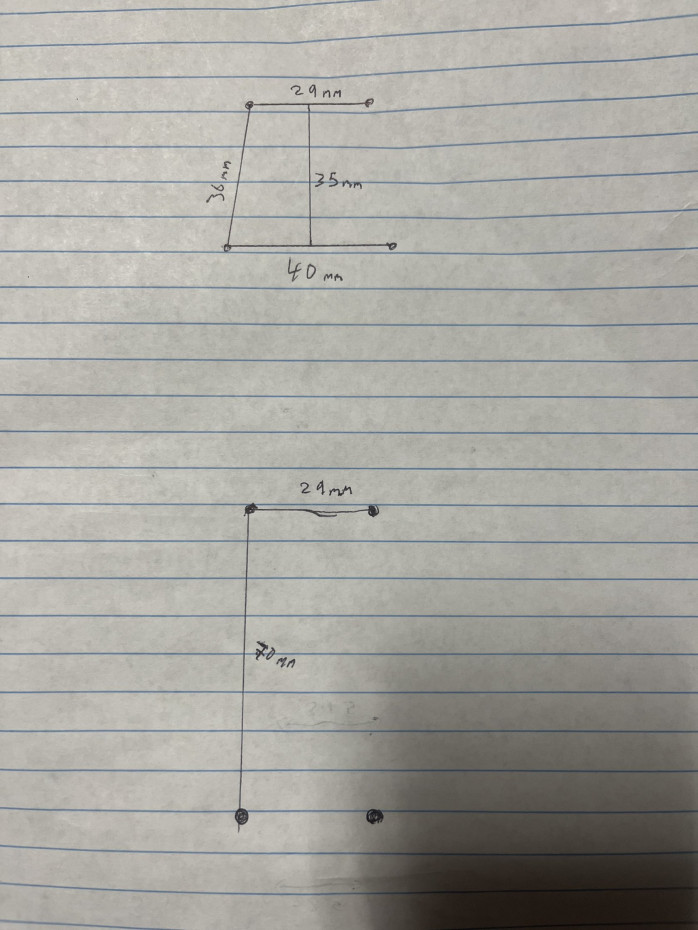
Eric,
I've included a photo with rough measurements. This should NOT be used for mounting, I would take all the measurements with a grain of salt.
I've included a photo with rough measurements. This should NOT be used for mounting, I would take all the measurements with a grain of salt.
Answer this question:
12/13/2023
Will this have a brakeless version? What's the weight without brakes?
12/13/2023
Anthony,
Weighed one. One toe and heel weighed 437g with the brake. They weighed 364g without the brake, making the brake 73g.
Weighed one. One toe and heel weighed 437g with the brake. They weighed 364g without the brake, making the brake 73g.
2/7/2024
Hey Anthony, at this point, Dynafit does not recommend running this binding without brakes.
Answer this question:
Earn store credit by writing reviews. Learn more.
Overall rating:
Add a photo


